Salvage support for submerged vessels, including locating, rigging, and controlled recovery to a safe location.
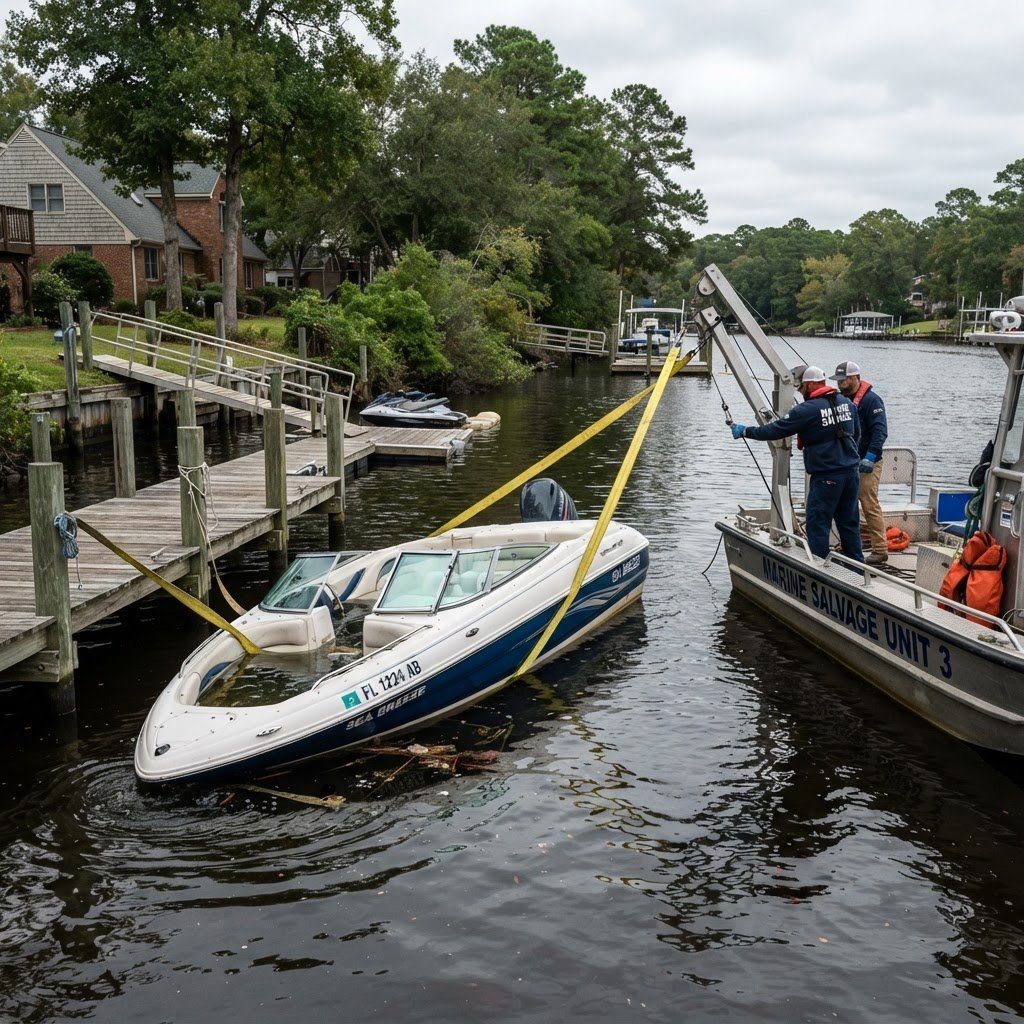
ATS Boat Recovery provides salvage support for submerged vessels. Salvage projects involve locating the vessel, preparing rigging, and carrying out a controlled recovery to a safe location.
Salvage feasibility depends on vessel condition, water depth, access, and environmental factors. ATS Boat Recovery does not guarantee that every vessel can be salvaged.
ATS Boat Recovery may provide photographs, estimates, invoices, vessel information, and available project documentation to help customers communicate with their insurance companies.
Salvage typically refers to the rescue of a vessel and its contents from a distressed or submerged state, while recovery is the broader process of retrieving and relocating a vessel. Salvage often includes locating, rigging, and controlled lifting of a submerged boat.
Locating a submerged vessel may involve diving, sonar, GPS coordinates from the incident, and visual search methods. Once located, an underwater inspection helps determine the condition and best salvage approach.
Vessel condition, water depth, bottom composition, weather, site access, and environmental regulations all influence salvage feasibility. An assessment helps determine whether a controlled salvage can be performed safely.
Yes. Submerged vessels may leak fuel, oil, or other fluids. Salvage planning includes assessing and addressing potential environmental hazards to minimize impact during the recovery operation.
Deep water salvage is more complex and depends on depth, vessel size, and available equipment. Contact us with the details of your situation, including the estimated water depth, and we can discuss whether salvage is feasible.
Tell us where the vessel is located and what happened. We will review the information and contact you to discuss the available recovery options.